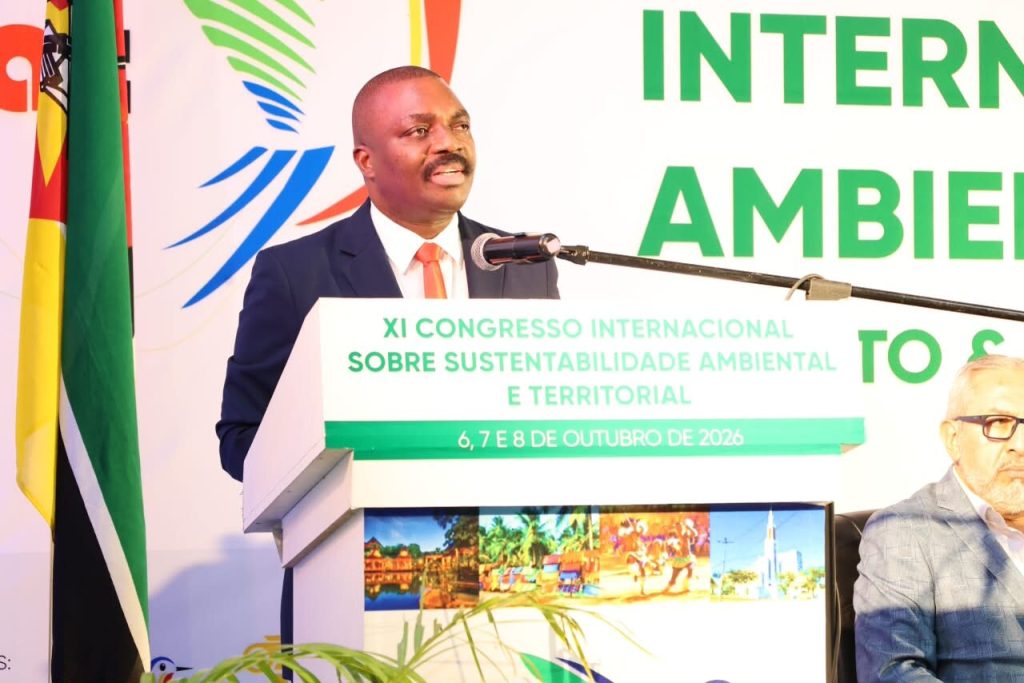
The Secretary of State for Science and Higher Education, Edson da Graça Francisco Macuácua, closed the 11th International Congress on Environmental and Territorial Sustainability on 8 October 2026. The congress ran from 6 to 8 October in Maputo and Chongoene, co-organised by Joaquim Chissano University, Save University and the Foundation for Environmental Sustainability.
The full text of the closing address is published below.
A historic landmark
It is with great honour and a sense of responsibility that I take the floor at the closing of this 11th International Congress on Environmental and Territorial Sustainability. Over three days, Mozambique became the epicentre of the most urgent scientific and social debate of our time: environmental and territorial sustainability.
I extend deep recognition to Joaquim Chissano University, Save University and the Foundation for Environmental Sustainability for successfully co-organising this Congress. Your exemplary leadership and cooperation have shown that joining the efforts of academia and civil society organisations is the surest path to meeting the challenges of our century.
This congress was not merely another scientific event: it was a historic landmark for Mozambique and for the world. It was the first time the African continent has hosted this International Congress. At a moment when the world is debating the planet’s future, Joaquim Chissano and Save universities joined theoretical reflection on global challenges to the practical reality of the concrete problems afflicting their communities.
What these days achieved
Applied knowledge production. We witnessed the sharing of scientific knowledge, innovative data, valuable territorial assessments and resilience proposals that must not remain shut away in libraries.
Stronger scientific networks. We consolidated international partnerships that place Mozambican science on the global sustainability map.
Inclusive dialogue. We brought together the voice of senior scientists, the enthusiasm of young researchers and the concerns of communities, seeking to strengthen local responses to global challenges.
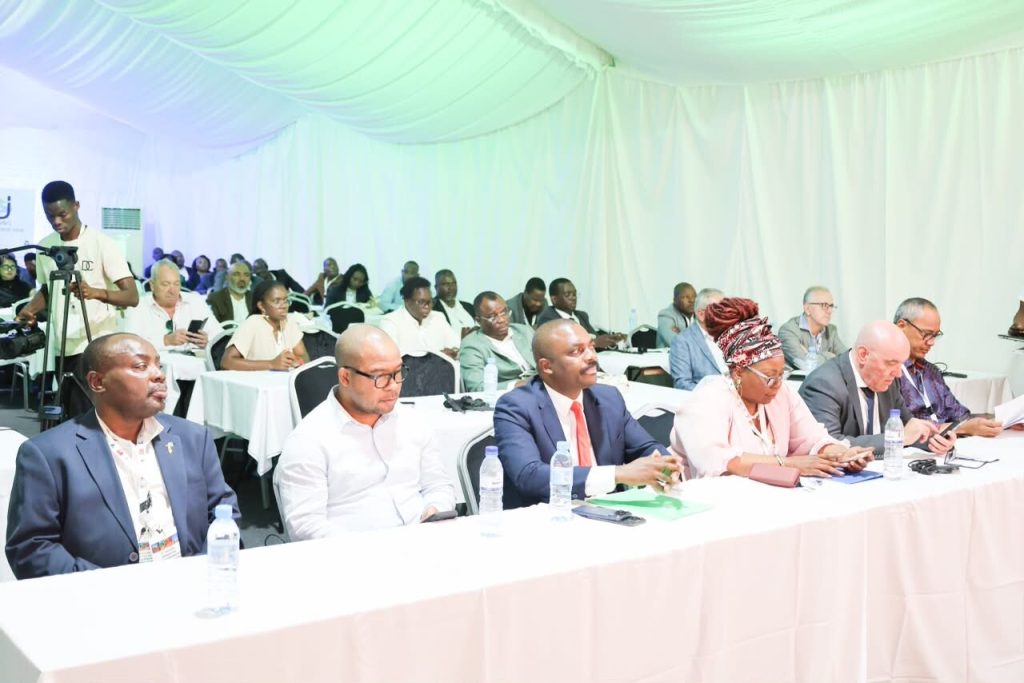
For our academia, the Congress reaffirmed the university’s role as a beacon of development. Higher education cannot be an ivory tower. It must be the engine of scientific solutions to the challenges society faces.
For the wider community, the relevance of this congress is vital. Mozambique is on the front line of climate change. We feel first-hand the impacts of severe cyclones, prolonged droughts and erosion. Every reflection shared here translates into the possibility of saving human lives, protecting ecosystems, securing our people’s food supply and promoting sustainable development.
The 11th Congress ranged beyond ecological questions. Given the cross-cutting nature of environmental matters, it addressed public policy, economic potential and opportunities, and social dynamics in a multidisciplinary way, stressing the importance and the necessity of public policy being defined on the basis of scientific evidence, in the service of development that is sustainable socially, economically and environmentally.
A call to action
Our most important statement today is therefore an urgent call to action. The knowledge we shared at this congress cannot remain locked in academia or filed away in digital reports. The true wealth of this congress is measured by the real impact of the research on the community. Scientific rigour reaches its fullness only when it translates into better lives for ordinary citizens, when it protects the ecosystem and when it generates just development.
Before us lies the monumental challenge of the energy transition. This transition is not merely a technical or economic choice; it is an ethical imperative and one of survival. We must protect our planet, protect our communities, accelerate decarbonisation, invest in clean energy and design environmentally sustainable models of territorial planning.
For this to be achieved, however, we must apply our research to solving concrete challenges. We therefore urge universities, research centres and the private sector to join efforts with the State. We need practical solutions for water management, for sustainable agriculture, for intelligent urban planning and for environmental preservation. Every piece of research must be a tool of social transformation. Our ultimate goal must always be the strengthening and resilience of communities.
Challenges and next steps
The congress ends today, but the real work begins now. Our challenges are clear:
First: wider dissemination of scientific research, through the creation of an integrated platform for sharing data, information and scientific knowledge on environmental sustainability among higher education institutions, research institutions, public institutions, civil society and community organisations, so that it is taken up by local authorities and, fundamentally, by communities.
Second: continuing to develop lines of applied scientific research that respond directly to our communities’ local planning and sustainable development challenges.
Third: encouraging the sustainability models discussed to be replicated in practice. Transferring the product of scientific research from the university to the community, working with public, private, civil society and community bodies for the concrete application of knowledge in meeting environmental and territorial sustainability challenges.
Fourth: turning scientific research into public policy.
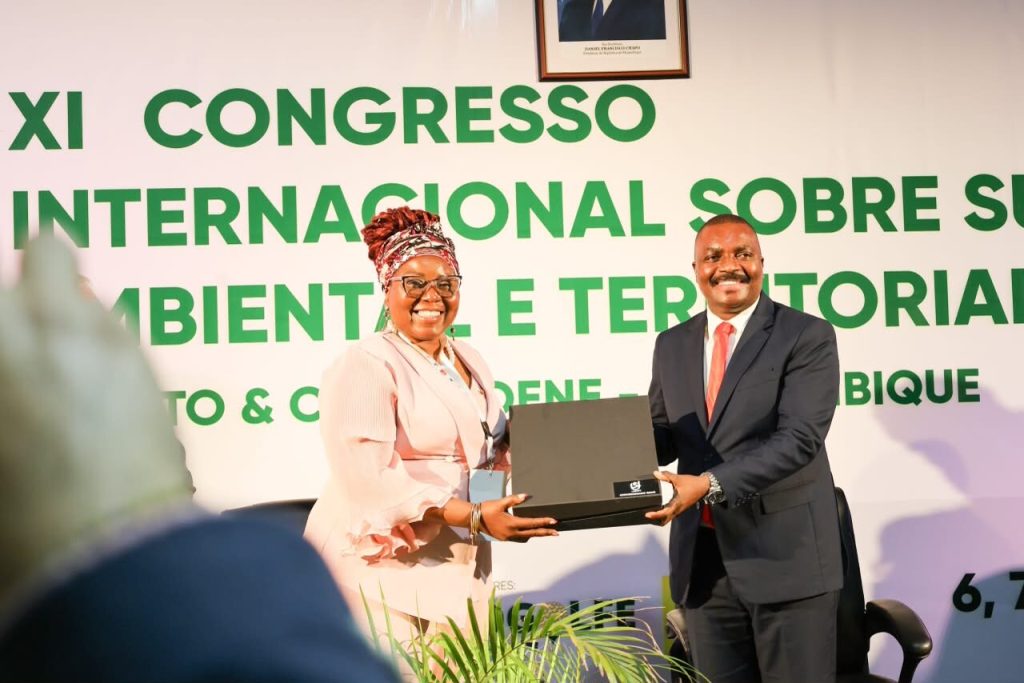
I congratulate all speakers and moderators for sharing this heritage of knowledge and for your commitment to the future of our planet and our communities, expressed in the diagnoses and the solutions presented for meeting the challenges of environmental and territorial sustainability.
Recognition and thanks go to all who, directly and indirectly, contributed to the success of the Congress: the researchers, the teaching staff, the technical and administrative staff, the secretariat, the protocol team, the drivers, the attendants and the cooks, among others.
Congratulations to Joaquim Chissano and Save universities and to the Foundation for Environmental Sustainability on the success of the 11th Congress.
With these words, I have the great honour of declaring closed the 11th International Congress on Environmental and Territorial Sustainability. Safe travels to all participants. Thank you for your attention.