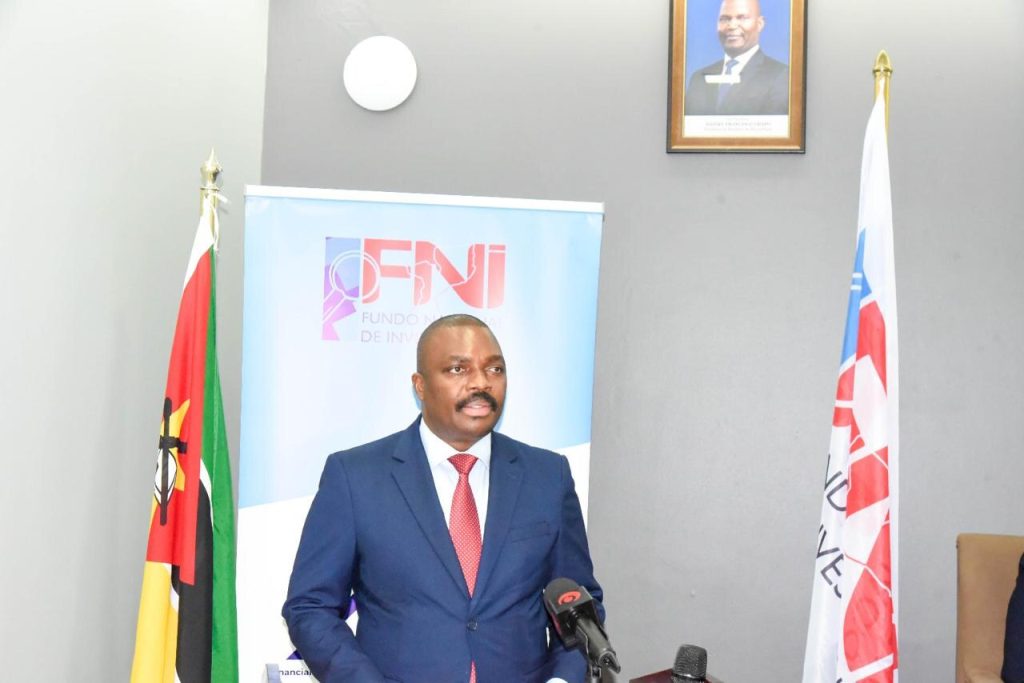
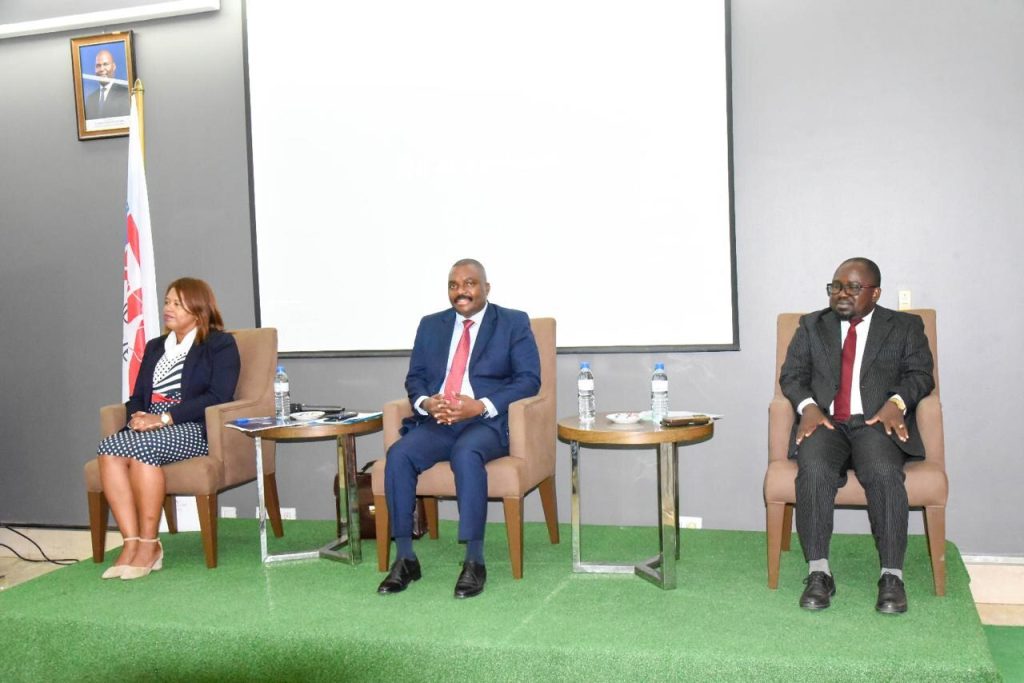
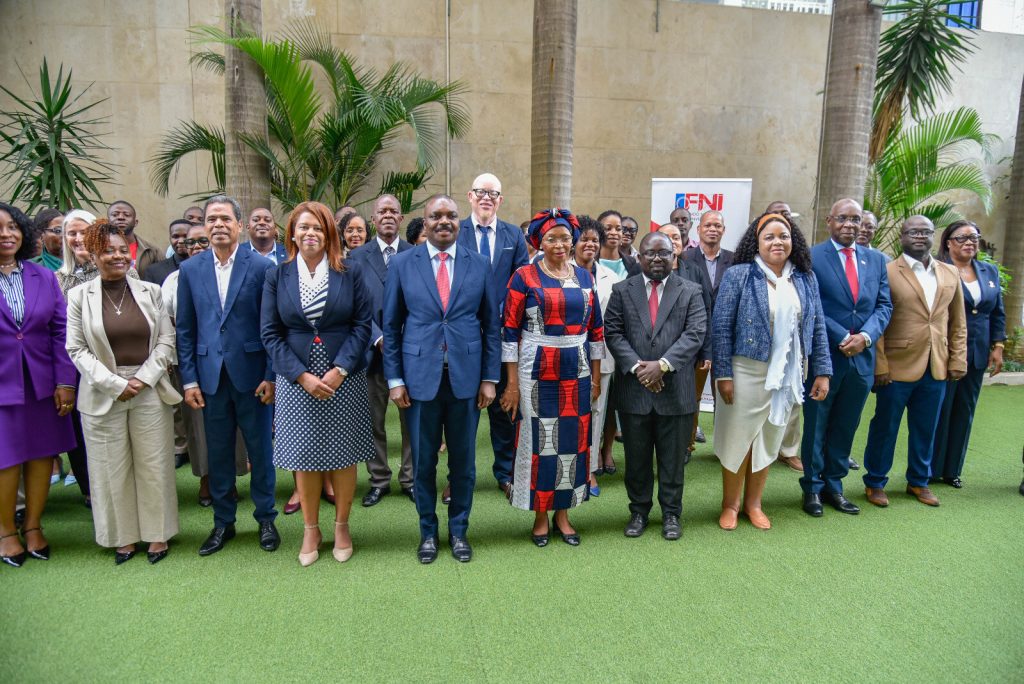
The Secretary of State for Science and Higher Education, Edson da Graça Francisco Macuácua, chaired the opening session of the Science Funding Network Meeting of the Community of Portuguese Language Countries (CPLP), which brought together in Maputo, on 7 October 2026, the presidents and directors of the science funding agencies of the Portuguese-speaking world.
The full text of the address is published below.
A common home
It is with great honour and a sense of responsibility that I take the floor, on behalf of the Government, at this opening session of the CPLP Science Funding Network Meeting. To our esteemed delegates, scientists and partners who have travelled from every corner of our community: you are most welcome. I sincerely hope you will feel at home, for within the CPLP we share more than a scattered geography — we share an identity and a common home.
What unites us here goes far beyond diplomatic proximity and geographical arrangement. Sharing our common official language is the fundamental pillar for promoting cooperation among CPLP agencies. Portuguese is not merely a vehicle of communication; it is a platform for thought and a heritage of identity that dissolves bureaucratic and cultural barriers, facilitating researcher mobility, data sharing and the creation of robust scientific consortia. Speaking the same language allows us to design knowledge networks that are more fluid, more cohesive and globally competitive.
This meeting is therefore not merely a working session: it is the living reaffirmation of the historic ties of friendship, cooperation and solidarity that bind our peoples. Our shared language and common past form an unshakeable foundation. Yet it is through science and knowledge that we project this legacy into the future, turning our cultural heritage into a platform for innovation and global development.
The role of funding agencies
Funding agencies play a fundamental role in mobilising resources for research. Without their strategic vision and operational capacity, the production of knowledge would stagnate. Funding scientific research is not a luxury; it is an indispensable strategic investment. It is science that gives us the tools to eradicate poverty, combat climate change, improve public health and drive a knowledge-based economy. To fund science is to fund the sovereignty and progress of our nations.
We know, however, that the present times impose severe challenges on resource mobilisation. Public budgets face growing pressures and competition for international resources is fierce. More than that, we face the critical challenge of the long-term sustainability of the funding agencies themselves. We cannot allow science to live in cycles of chronic uncertainty. We need institutional and financial models that are robust, predictable and resilient.
Against this backdrop, our call is clear: we must think outside the box. We cannot continue to depend exclusively on traditional models of budget allocation. It is imperative that this Network explore and seek new sources of funding.
Knowledge is not built without resources. It is essential to stress the central importance of continuous, predictable funding for scientific research. Investing in science is neither a cost nor a luxury: it is the most profitable investment a State can make in its own future. It is through science that we find answers to climate crises, to public health challenges and to the digital transition. Funding research means driving the economic development and social well-being of our populations.
The relevance of our cooperation
Our union in this space is not merely diplomatic; it is strategic and profoundly bound up with identity. Portuguese is today one of the most important languages of world science. When we fund science in the CPLP, we are not merely supporting individual researchers. We are building bridges of knowledge that link oceans and continents — from Africa to Europe, from South America to Asia.
Our agencies are the engine that turns local talent into global solutions. It is the agencies that ensure research responds to the problems of our societies, promoting social inclusion, innovation and sustainable economic growth.
Current challenges
The historic moment we are living through imposes complex and urgent challenges. The world faces unprecedented technological transformation, driven by artificial intelligence and the digital transition, while also confronting the challenges of climate change and the need for just energy transitions.
For our agencies, the challenge is twofold:
First, to combat the asymmetry of resources between our nations, ensuring that no country in our community is left behind in the technological race.
Second, the pressing need to cut red tape in accessing funds, making financing more agile, transparent and focused on real impact.
The sustainability of funding
We cannot speak of science without addressing its financial sustainability. Science is not a cost; it is the investment with the highest rate of return for the future of any nation.
To secure that sustainability, we need to break with exclusive dependence on the State budget. The future demands that we be creative. We need to:
Design joint co-financing mechanisms within the CPLP space.
Attract private and philanthropic investment more assertively.
Strengthen partnerships with international blocs, demonstrating that the CPLP is a robust, mature scientific ecosystem, attractive for global investment.
The future of funding agencies
The future of higher education funding agencies will have to be profoundly transformative. Universities are no longer merely places of traditional teaching: they are living centres of innovation and entrepreneurship.
One of the central debates of this meeting should focus on the sustainability challenges of scientific research funding agencies. In a complex and volatile global macroeconomic scenario, securing the financial stability of our institutions is a herculean challenge. Exclusive dependence on State budgets often places science in a position of vulnerability. We need to equip our agencies with models of governance and financial management that ensure long-term resilience.
This demands courage and vision. Above all, it demands a paradigm shift in the search for new alternatives for funding scientific research, thinking strategically outside the box. We cannot continue to depend solely on traditional formulas. We must explore innovative mechanisms: from bolder public-private partnerships and scientific philanthropy funds, through to attracting large-scale multilateral international funding. Thinking outside the box also means connecting science with the business fabric, demonstrating the commercial and social value of the knowledge generated, and creating ecosystems in which private investment feeds scientific discovery and vice versa. We should also design joint co-financing programmes within the CPLP itself, where the sharing of resources multiplies the impact of our investments.
Closing
This meeting of the CPLP Science Funding Agencies Network is the ideal stage for turning these challenges into opportunities, and these into concrete agendas for action. May our common language be the catalyst of scientific cooperation and diplomacy, and may our shared boldness open new doors for science within the CPLP.
With these words, I have the honour and privilege of declaring open the Meeting of the CPLP Science Funding Agencies Network.
Thank you all very much, and may your work go well.